|
and The Fourier Revolution |

|
Introduction
Nicolet Instrument Corporation operated between 1966 and 1992 in Madison, Wisconsin.
NIC designed, manufactured, and sold spectrometers, computers, digital oscilloscopes
and biomedical equipment. NIC was bought out by Thermo Scientific in 1992. Thermo's
infrared spectrometers still bear the Nicolet name.
Analytical chemists want to know how molecules are put together. There are many
tools available to do this, but nuclear magnetic resonance (NMR) spectroscopy,
mass spectroscopy (MS) and infrared (IR) spectroscopy are the major ones. Fourier
versions of all three became practical realities around 1970. The improvement
in sensitivity and resolving power constituted a revolution. All three tools
depended originally on software and computers supplied by Nicolet.
The Fourier revolution has many roots. The digital computer is one. The Fast
Fourier Transform (FFT), a 1965 mathematical discovery, is another. Digital scientific
instruments, for example, signal averagers, is yet another.
This is an account of the Fourier revolution of scientific instruments. It includes
historical perspectives, personalities, science and business. Revolutions start
when seemingly unrelated ideas come together. For example, the designer of the
PDP-8 and the mathematicians who discovered the FFT did not know they would revolutionize
chemistry. The unexpected connections between ideas is what makes this website
interesting, I hope.
This website is also a personal story. My name is Jack Kisslinger. I spent 23
years at Nicolet and I played a role in the revolution.

The story begins with the Mnemotron

An important enabling technology in 1951 was the magnetic core memory. It was
random access. It was fast at 100,000 reads and writes per second and reliable
too. There could be a thousand or more memory locations, each holding a 4 or
5 digit number. If you were an engineer working in 1951, you were presented with
new and very interesting possibilities.
Read about the Mnemotron.
The digital computer
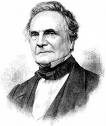
Charles Babbage could claim credit for the invention of the digital computer
in 1830. His claim is weakened somewhat by the fact that the
prototype
did not run until 1993. (Microsoft billionaire Nathan Myhrvold has the second
prototype in his living room.) Babbage called it a "difference engine" in reference
to the fact that it could only add and subtract. But it had 31 digit accuracy.
Its purpose was calculating and printing(!) mathematical tables. It was not
a stored program computer. It could not make decisions based on inputs or calculations.
 Charles Babbage was the
Stephen Hawking of his day. He, like Hawking, was the Lucasian Professor of Mathematics.
Charles Babbage was the
Stephen Hawking of his day. He, like Hawking, was the Lucasian Professor of Mathematics.
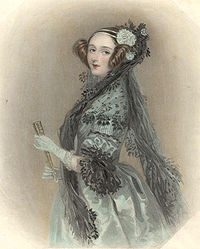
The difference engine project had a software engineer. Her name was Ida Lovelace,
Lord Byron's daughter. She can legitimately claim to be the first software engineer.
The PDP-8, introduced in 1965, was the first digital computer capable enough
and cheap enough to be useful in scientific instruments.
Read about the PDP-8.
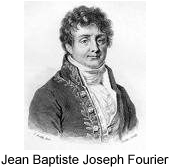 Fast Fourier analysis
The need to perform Fourier analysis was very apparent in 1965. The need arose
from seismology, crystallography, sonar and many other applications. There was
also a realization that Fourier Transform Nuclear Magnetic Resonance and Fourier
Transform Infrared spectrometers could be useful. But there was a problem. It
was impractical to evaluate the Fourier integral because it was too computationally
intensive. A mathematical discovery changed all that in 1965.
Read about the Fast Fourier Transform.
 How Nicolet got started
Nuclear Data was founded in 1958 to exploit an opportunity created by magnetic
core memory. Nicolet spins off from Nuclear Data.
Read about how Nicolet got started.
 The PDP-8 and the Fast Fourier Transform meet at Nicolet in 1968
Nicolet thrives and grows because it recognizes new opportunities. Nuclear
Data slowly dies because it does not stray from its core business.
Read about Nicolet's killer application.
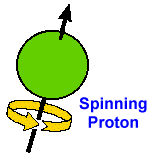 Nuclear Magnetic Resonance(NMR) spectroscopy explained
The connection between Mnemotron, Varian and Nicolet explained. Read the story
of how I smoked a Varian A60. Understand carrier wave NMR. Understand Fourier
Transform NMR. Maybe even listen to a FID.
Read about CWNMR and FTNMR.
 World's first carbon 13, proton decoupled FTNMR
Bruker's carbon 13 FTNMR and Nicolet's 1070/PDP-8 make history.
Read how the four threads come together.
 How the 1070/PDP-8 becomes one box
In 1969 I proposed a single box which combined the functions of a 1070 and
a PDP-8. It came to be known as the 1080. It is a two headed monstrosity.
Read how Nicolet got into the computer business.
Technical description of the 1080
The 1080 was a 1070-style signal averager and a 20 bit computer but not simultaneously.
Read the technical description of the 1080.
Nicolet participates in the Fourier revolution
The Nicolet 1080 is present at the birth of FTNMR, FTIR and FTMS. Nicolet
becomes a manufacturer of all three.
Read about the Fourier revolution.
 The Nicolet computer evolves
The Nicolet 1080 becomes faster, smaller and cheaper through succesive generations.
It goes extinct in 1996.
Read about how the 1080 evolves.
The Nicolet 1280 needs to be ten times faster
The 1280 gets a 24 bit assistant in the form of an array processor.
Read about the FFT array processor here.
The Nicolet 1280 needs to be replaced in 1983
The Nicolet FTIR spectrometer gets smaller, better and cheaper. The FTIR
data system must get smaller, better and cheaper too.
Read about efforts to replace the 1280.
 Personal Notes
Read about how the Mountain View Computer Museum
inspired me to write this website.
Read personal notes.
Chapter 15
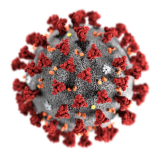 Coronavirus Project 2020
I attempt to explain the Fourier Transform through animation.
The original intent was to design something entertaining for a Museum.
Museums are not well attended due to the pandemic, so I put it online.
Click on the virus to see it.
Chapter 16
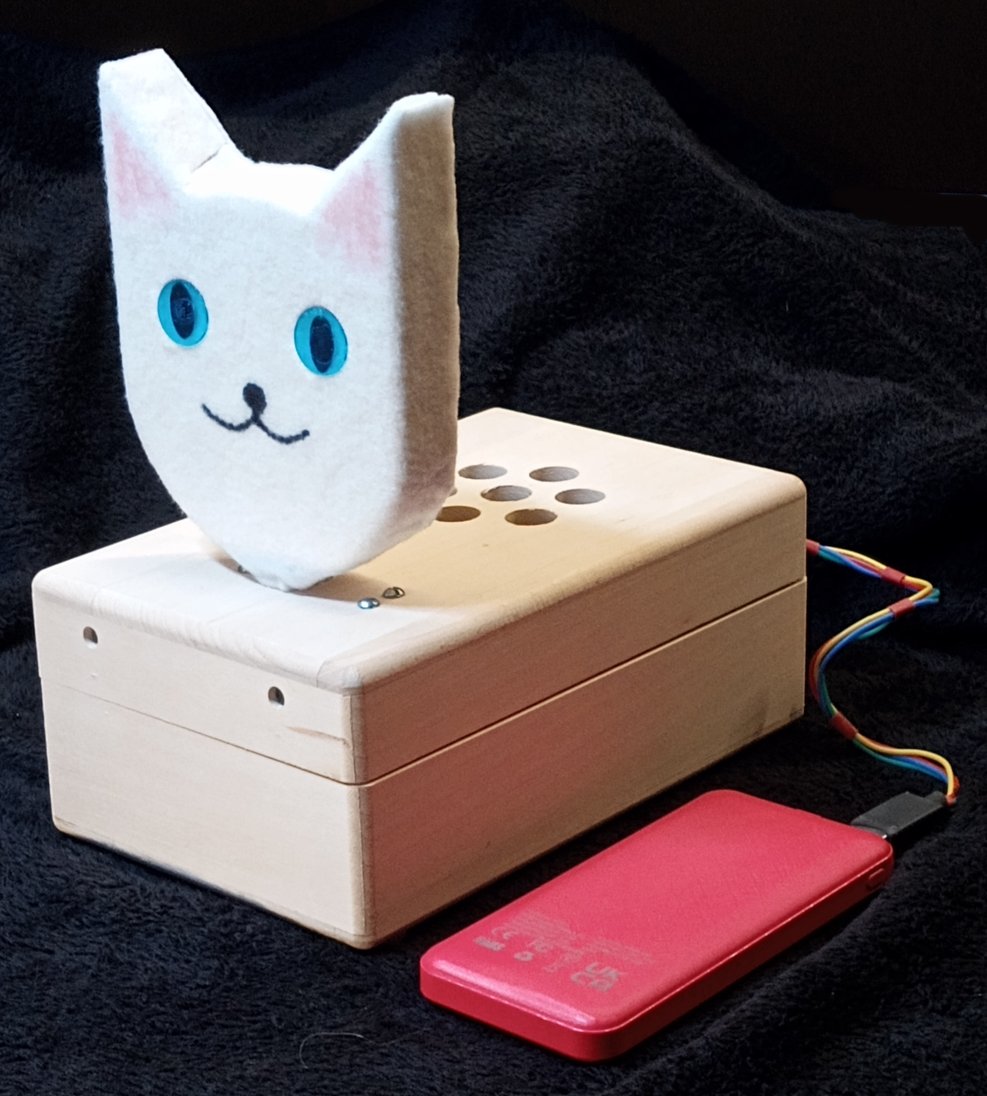
People and cats can determine the direction to a sound source. If you have two ears you can do this by measuring the difference in arrival time. I have implemented a sensor that can do this. It takes the form of a robotic cat in order to be more relatable.
Click on the cat.
Chapter 17
I was a Rock 'n' Roll musician in 1957. Here is the picture and a discography to prove it.
Click on the image.

Chapter 18
I play the piano in 2023
Click on the image.
Update: 8 July 2023
Update: 8 April 2022
Update: 18 June 2020
Minor update: 25 September 2018
Update: 5 July 2009
Minor update: 15 April 2009
Major upload: 29 March 2009
First upload: 23 January 2009
